
Using Exterior Materials To Elevate Street Appeal
First impressions are everything. Your home façade tells a story, resolved through material composition. Texture, form and tone all play a defined role and nothing is applied without purpose. Over the last four decades building architectural houses in Melbourne, here’s what we’ve learned about elevating street presence in high-end residential builds.
When we say ‘architectural build’, we’re referring to a home that is architecturally designed and site-specific, constructed using premium materials and finishes. These projects are engineered for long-term performance, while also tailored to align with a client’s unique lifestyle and vision. The result is a home that is visually distinctive and purposeful in how it’s brought to life. When it comes to façades, both design narratives and practical aspirations come into play.
Materials like concrete, stone, and in recent decades microcement are common for entry volumes and feature walls, enduring and expressive in an understated sense. Equally important is weatherproofing and lifespan.
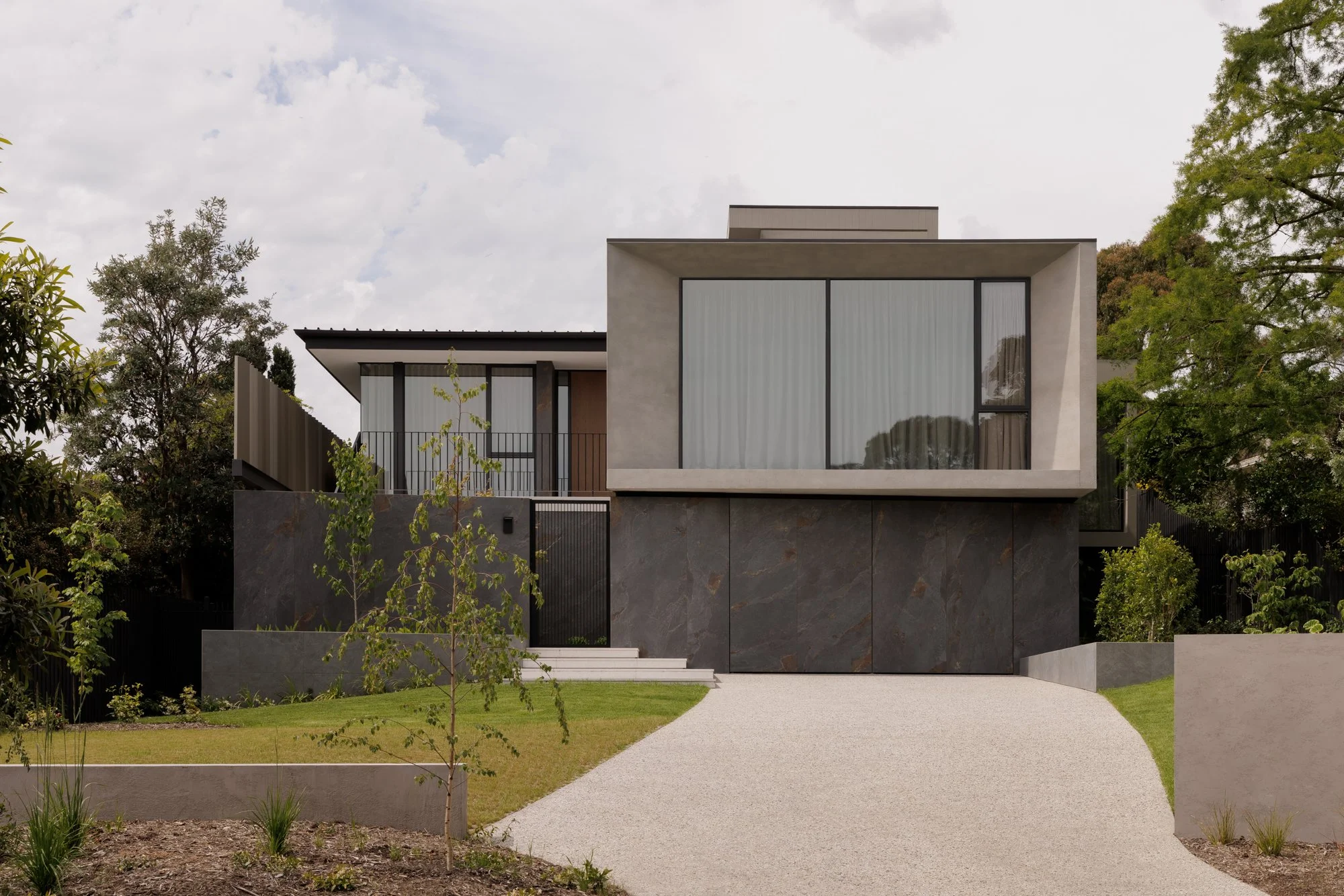
At our Eaglemont project, X-Bond Natural Concrete was specified to replicate the texture of raw concrete and align with the project’s geological design intent.
Classic red brick is seeing a resurgence, reinterpreted through a modern lens. Designers are elevating the familiar material through proportion and geometry. Brick’s warmth and texture offers a counterpoint to more minimal palettes and feels timeless yet current, bridging traditional suburban references with high-end aesthetics.
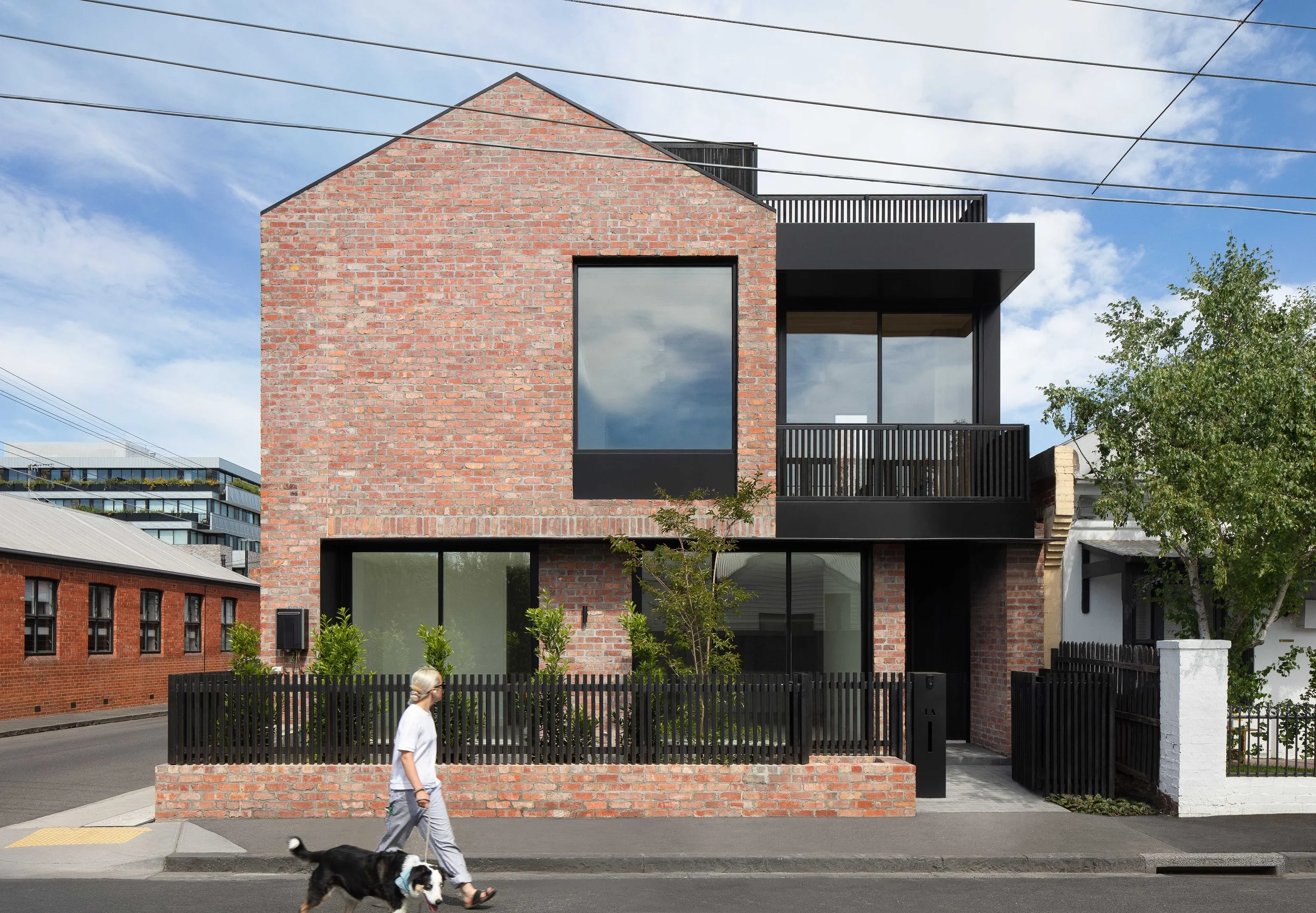
At our Windsor project, black timber battens and red brick reinforce the home’s crisp proportions through both rhythm and mass.
Our team has worked on a number of projects where timber battens introduce rhythm to contemporary home exterior design — with a twist. Instead of natural wood finish, many architects are specifying black. It can feel sharper and more architectural, integrating better within modern colour and material palettes than classic brown tones might.
Aside from aesthetic impacts, battens are also a clever method of mediating between public and private. More broadly, this speaks to how materials can be used not just as surface treatments, but as tools for spatial organisation. Subtle shifts in materiality can define zones and guide movement without the need for complicated structural separation. In this way, the façade becomes an extension of the internal planning logic.
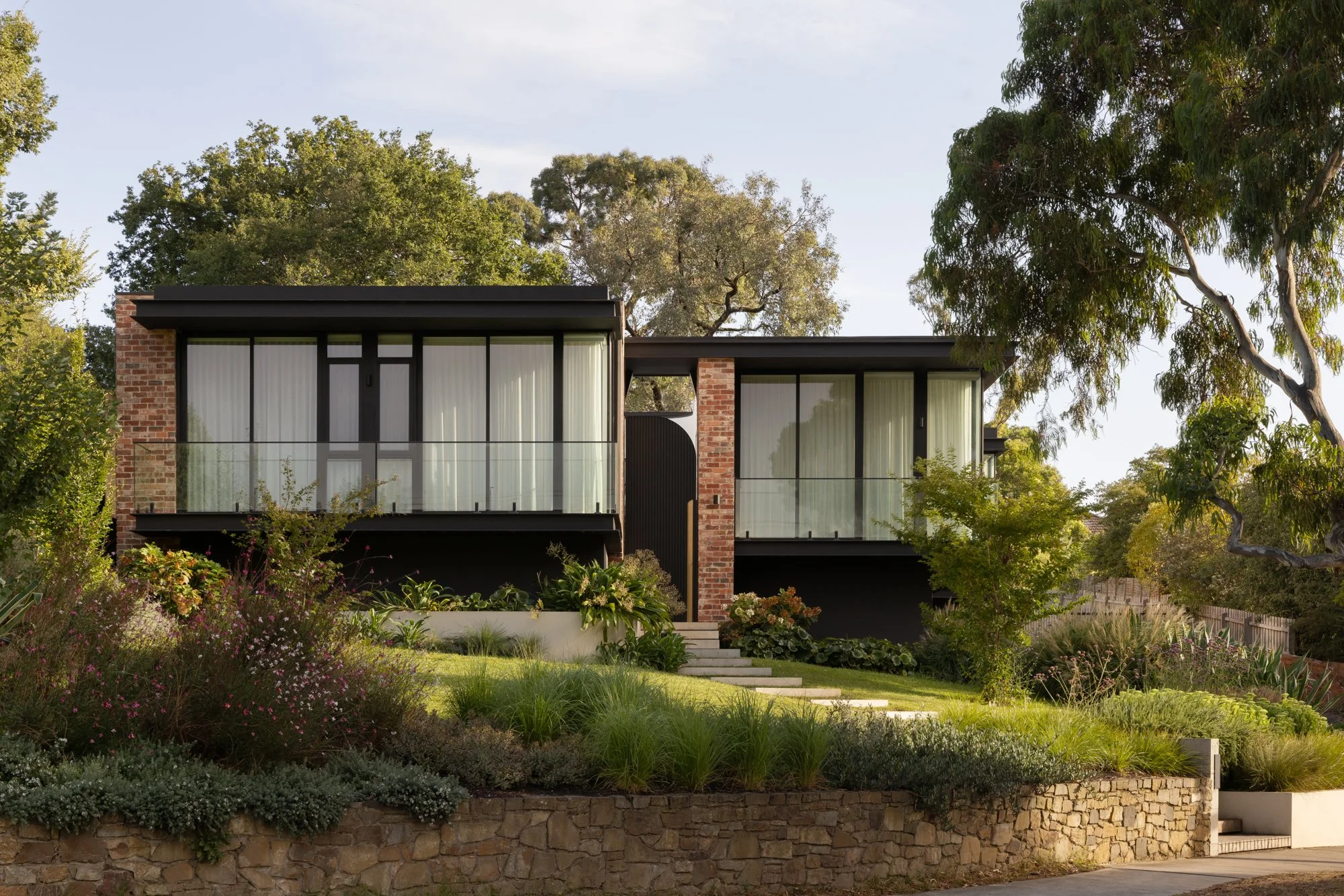
At our Ivanhoe East project, the façade articulates the different volumes of the home.
With residential renovations, it’s crucial that newer interventions sit comfortably alongside what’s already there. In a heritage restoration this might even be unavoidable.
Where a site or structure offers the opportunity to retain elements of the existing façade, it’s worth preserving. Reclaimed material gives a project unique character that can’t be replicated no matter how precise an engineered version may be. The value lies in the history and authenticity of the materials.
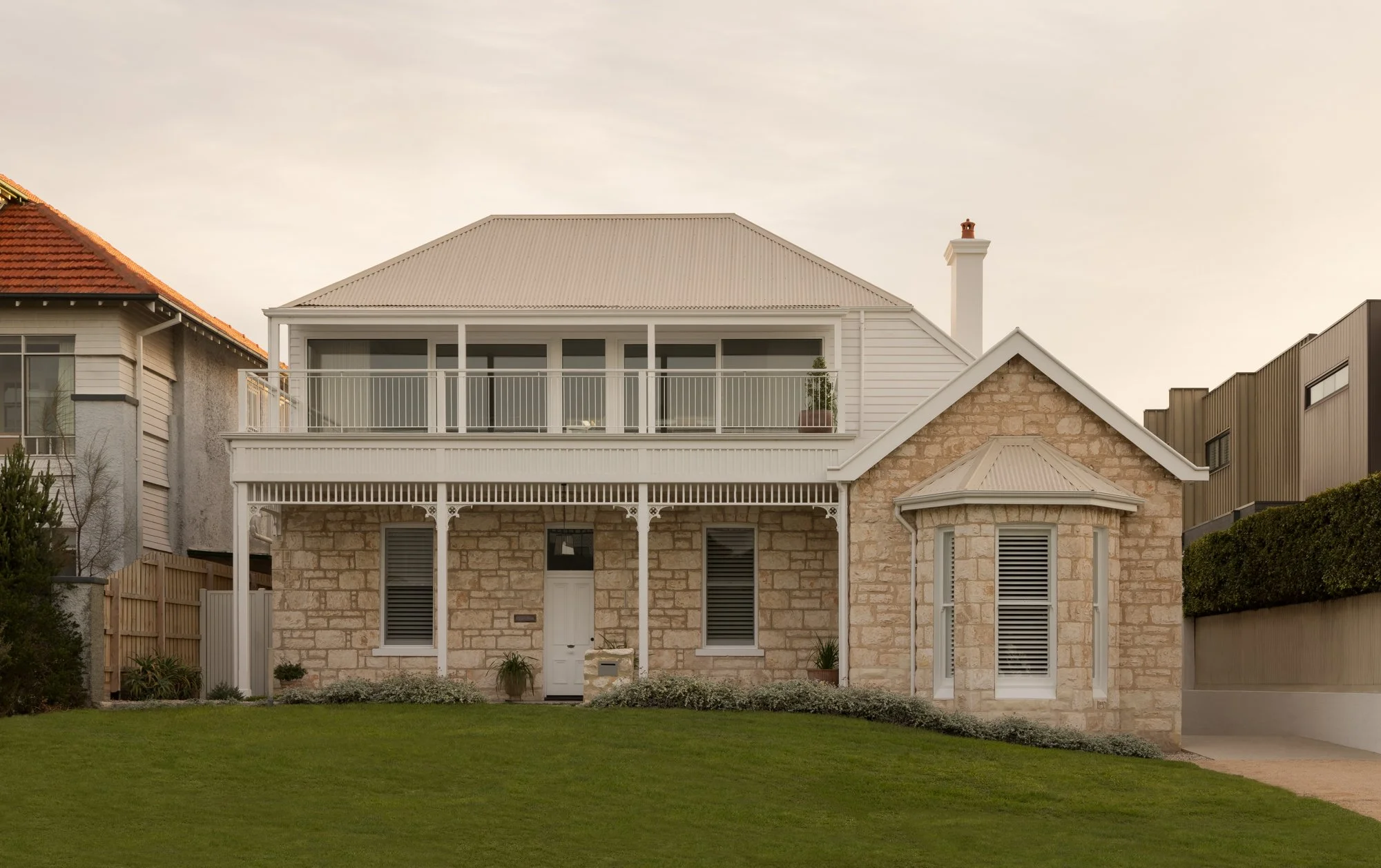
At our Sorrento project, 19th century stone was kept intact throughout the entire home despite the extensive restoration works completed. Great care was taken by our construction team to work with as many original features as possible.
Ultimately, a well-designed façade is never the result of a single material or gesture. It’s the outcome of considered decisions in how materials reinforce the architecture as a whole. And this is what gives your house street credentials.