
Bringing The Build to Life: 10 Steps to Expect
If you’re building a new home or renovating your existing property, congratulations! It’s an exciting and rewarding process — but, it can also be a daunting one if it’s your first project. We’ve summarised ten steps involved in building and/or upgrading a home, so that you can get an idea of what happens next. Transparent, open communication at each stage of the process is an important part of the builder-client relationship, and one of our core values at Alt.
1. Setting a Budget
The very first step, and probably the most important one, is to set a budget. To come up with a figure, ask yourself:
What is your ideal budget?
How many square metres is your property?
How many rooms are being built/renovated?
What are your design requirements?
Once you have an idea of the above, your builder can help assess what can be achieved with your target budget, drawing on current market rates, material costs, and construction experience.
2. Plans and Permits
Once you’ve decided on your design requirements, your builder can assist you with plans and permits. By this stage, contact has been made with an architect (if required), engineer and building surveyor to assist with putting together the plans and submitting them for permit approval.
Some of the different permits available are:
Town Planning Permit (if applicable)
Building Permit (always required)
Demolition Permit (if applicable)
Heritage Overlay Approval (if applicable)
3. Select Your Finishes
Now for the fun part. While permits are underway, this is the time to select all internal and external finishes. This is an exciting stage as you start to select the materials, fixtures, fittings and furnishings that will make your house a home. Often, clients (or an architect on your behalf) engage an interior designer to assist with selections.
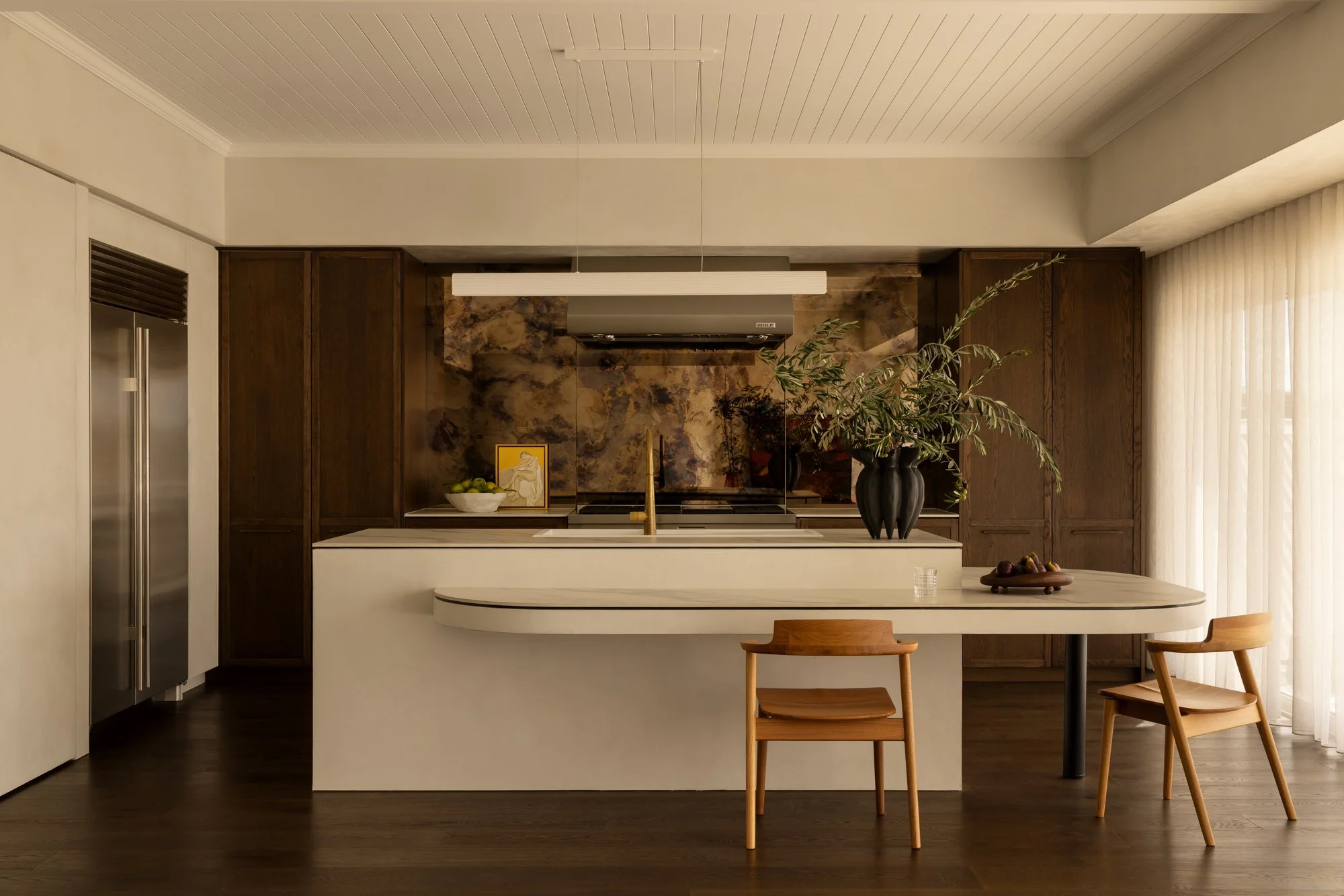
This kitchen was brought to life with microcement joinery, timber elements, and a statement glass splashback.
4. Revise Budget
To ensure costs are similar to the budget, we will provide an accurate quote according to the revised documentation compared to our original estimate.
5. Contracts, Permits & Deposits
Once satisfied, we seal the deal with contract signing through the standard Master Builders contract. As soon as we have Building Permit approval, it’s time to start the project — right after you pay your deposit.
7. Construction Works
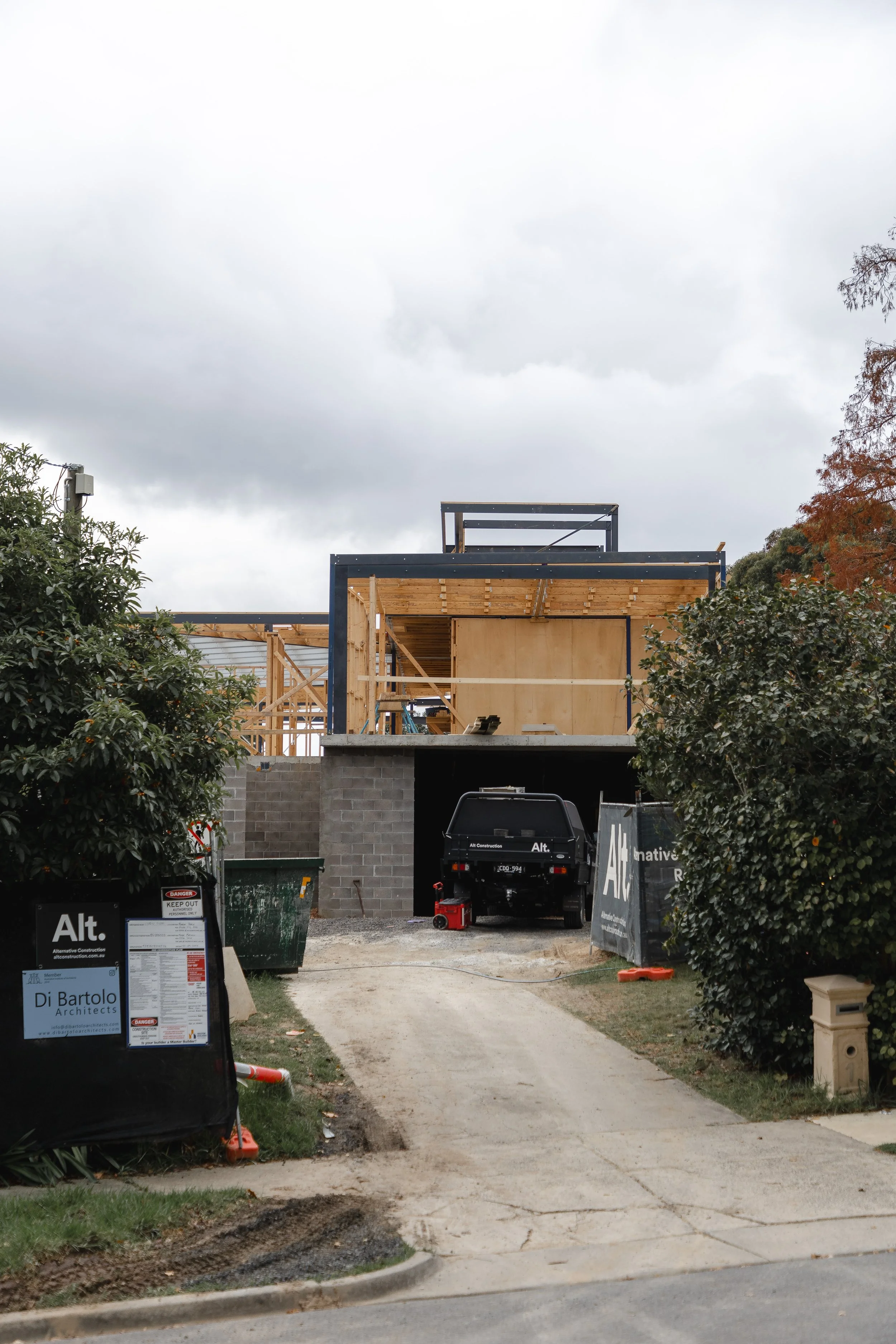
We’ll get the job up and running with a Project Manager, Site Manager and our crew of Carpenters. Generally the structure starts from the ground up, while internal works start from the top down. The typical stages of construction are:
Demolition (if necessary)
Removal of any existing structures on site to prepare for new construction.
Base
Site preparation, excavation, and pouring of the slab or foundation, forming the structural base of the build.
Framing
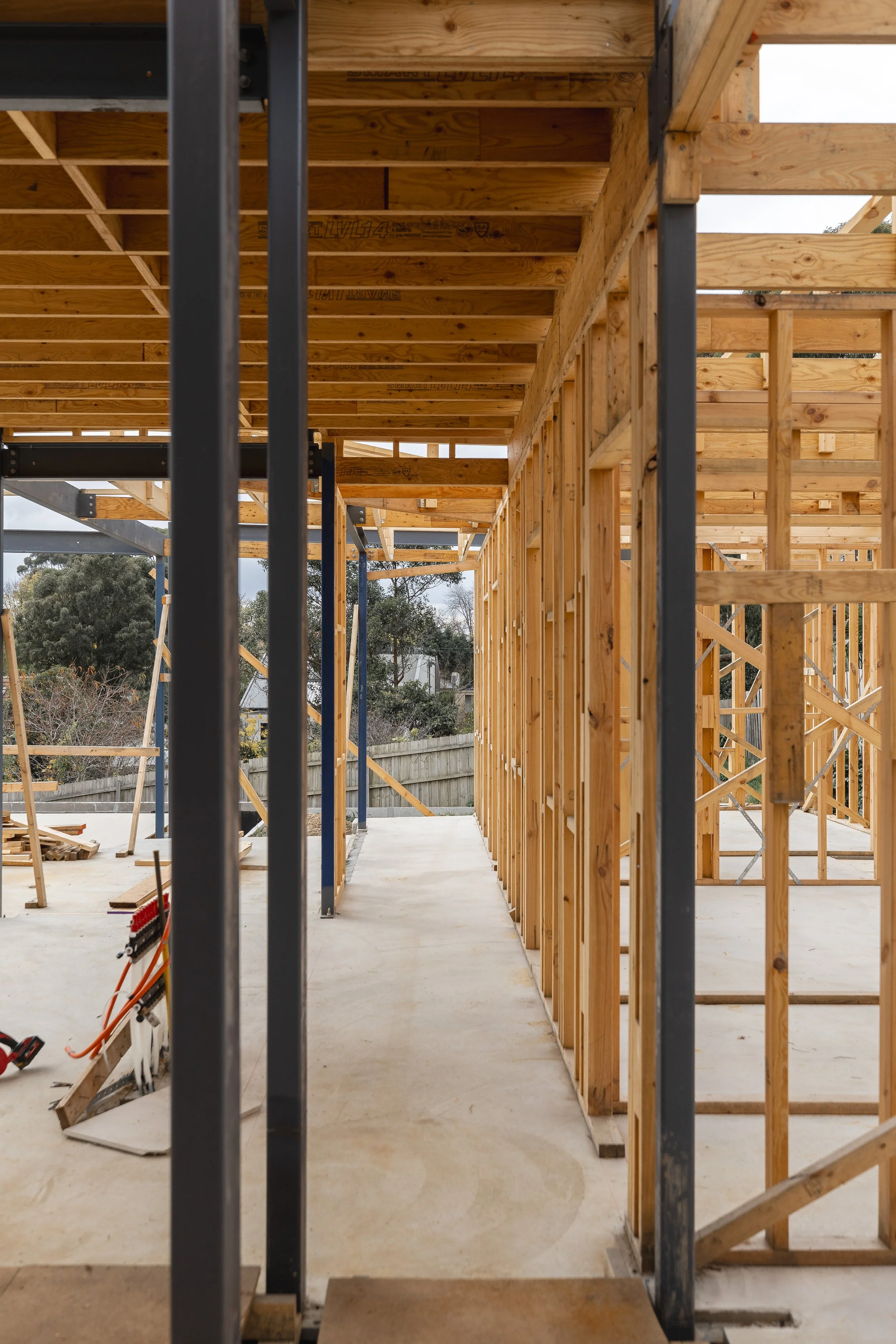
Construction of the structural frame, including walls, floors, and roof framework, defining the shape of the building.
Lockup
Once all of the external structure is complete — framework, cladding, roof, windows and external doors — the house is able to be ‘locked up’. Most interior fittings and fixtures will be installed after this stage.
Fixing
Installation of internal elements such as plaster, cabinetry, skirting, doors, and initial fit-off of electrical and plumbing fixtures.
Final
Completion of all remaining works, including painting, final fit-off, inspections, and handover of the finished project.
8. Monitoring Works
This is part of the construction phase. During the build, we supervise trades and their contracts to suit the works required. Unforeseen detail is explained and negotiated in advance. Fine detail will be worked ahead of the actual project progression.
9. Ordering Materials
Again, this is part of the construction process and can occur at multiple stages depending on design direction. Items with a major lead-time will be purchased at the start of the project to avoid any construction delays. Material samples can be approved by the client at this time, or during the build as selections develop.
10. Handover
Works will be complete on handover date. Nearing the end of the project, it’s a good idea to set-up electricity, internet, gas, water etc. so you can move in as soon as handover comes around.